If you’re renovating an older property, understanding asbestos vinyl tiles Brisbane is essential before removing any flooring. Many homes across Brisbane still contain vinyl tiles installed decades ago, and in many cases, those tiles include asbestos materials.
Most homeowners only discover the problem once they start lifting the floor. A tile comes loose, the adhesive underneath appears black or brittle, and suddenly the renovation stops. At that moment, uncertainty takes over because no one wants to risk spreading asbestos fibres.
From my experience working in Brisbane, flooring is one of the most common places where asbestos gets disturbed accidentally. Therefore, knowing what to look for and how to act early can save time, stress and costly delays.
Why Asbestos Was Used in Vinyl Tiles in Brisbane
Builders used asbestos in vinyl tiles because it improved durability and resistance to heat and moisture. As a result, these tiles became a standard flooring option in many homes built before the late 1980s.
Additionally, asbestos made tiles stronger and longer-lasting. Because bathrooms, kitchens and laundries needed moisture-resistant materials, vinyl asbestos tiles became a popular choice.
Over time, these tiles remained hidden under newer flooring layers. Consequently, many homeowners do not realise they exist until renovation work begins.
👉 Planning to remove old flooring?
Book an Asbestos InspectionA professional asbestos inspection in Brisbane helps identify hidden risks before you start demolition: https://asbestosremovalistbrisbane.com/asbestos-inspection-brisbane/
Where You’ll Find Asbestos Vinyl Tiles in Homes
In Brisbane properties, asbestos vinyl tiles usually appear in specific areas.
Common locations include:
- kitchens and dining areas
- bathrooms and laundries
- hallways and entryways
- under carpet or newer flooring
In many cases, new flooring has been installed over the original tiles. Because of that, homeowners only discover asbestos when they remove layers during renovation.
From experience, I often see clients surprised when they lift carpet and find old vinyl tiles underneath.
How to Identify Asbestos Vinyl Tiles
You cannot confirm asbestos just by looking, but certain signs increase the likelihood.
First, consider the age of the home. Properties built before 1990 are more likely to contain asbestos tiles.
Next, look at the tile size and pattern. Older vinyl tiles often come in 9×9 inch formats, which frequently contain asbestos.
Additionally, check the condition. Tiles may appear brittle, faded or worn.
Finally, consider the context. If the flooring sits beneath newer layers, it likely dates back to older construction periods.
However, testing remains the only reliable way to confirm asbestos.
The Hidden Risk: Adhesives Under Vinyl Tiles
One of the biggest risks does not come from the tiles themselves. Instead, it comes from the adhesive underneath.
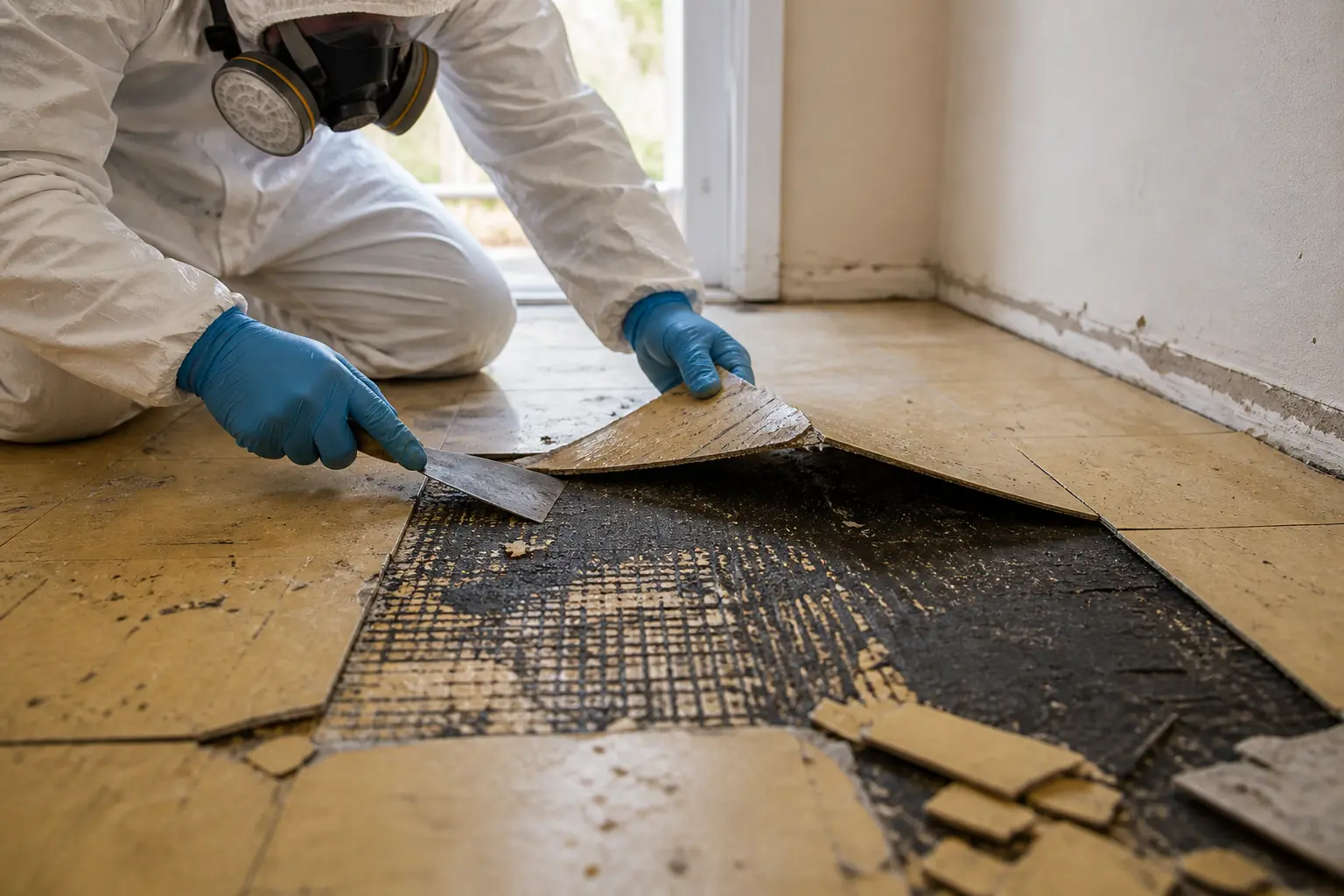
In many Brisbane homes, black mastic adhesive used under vinyl tiles may contain asbestos. This adhesive sticks firmly to the subfloor, which makes removal more difficult.
I’ve seen situations where someone removes tiles carefully but then sands or scrapes the adhesive aggressively. As a result, fibres spread into the air and contaminate the area.
Therefore, the adhesive layer often creates more risk than the tiles themselves.
Are Asbestos Vinyl Tiles Dangerous?
Vinyl asbestos tiles are not always dangerous if they remain intact. However, the risk increases significantly once they are disturbed.
For example, breaking tiles or grinding adhesive releases fibres into the air. Because flooring work often involves scraping and sanding, exposure risks increase quickly.
In my experience, problems usually start when homeowners try to remove flooring without checking first.
Common Mistakes I See When Removing Vinyl Tiles
Over time, I’ve noticed several mistakes repeated across Brisbane renovation projects.
One common mistake involves pulling tiles up forcefully, which breaks them into pieces.
Another issue occurs when people sand or grind adhesive to speed up removal. This creates airborne dust and spreads fibres.
Additionally, some homeowners try to clean debris using standard vacuums. Unfortunately, this spreads contamination further.
Finally, rushing the job without planning often leads to bigger delays later.
What to Do If You Have Asbestos Vinyl Tiles
If you suspect asbestos vinyl tiles, follow a controlled approach.
First, stop any removal work immediately.
Next, avoid disturbing both tiles and adhesive.
Then, restrict access to the area if possible.
After that, arrange professional inspection or testing.
Once confirmed, plan removal carefully rather than rushing into action.
👉 Found suspicious tiles during renovation?
Get Professional AdviceProfessional asbestos removal in Brisbane ensures safe handling and containment: https://asbestosremovalistbrisbane.com/asbestos-removal-brisbane/
Can You Remove Vinyl Asbestos Tiles Yourself?
In Queensland, limited asbestos removal is sometimes allowed for small amounts of bonded asbestos. However, vinyl tiles and adhesives often create more complexity than expected.
For example, adhesives can stick firmly to surfaces, which makes safe removal difficult. In addition, breaking tiles increases fibre release.
Because of these risks, most homeowners choose professional removal instead of taking unnecessary chances.
When to Call a Professional
You should contact a professional when:
- you plan to replace old flooring
- tiles appear damaged or brittle
- adhesive removal is required
- you are unsure about asbestos presence
From experience, early action makes a major difference. Projects move faster when asbestos is identified before demolition begins.
👉 Need help before starting your renovation?
Book Professional RemovalProper asbestos disposal in Brisbane ensures materials are handled safely after removal: https://asbestosremovalistbrisbane.com/asbestos-disposal-brisbane/
Conclusion
Understanding asbestos vinyl tiles Brisbane helps homeowners avoid common renovation mistakes and manage risks properly.
Because asbestos often hides beneath flooring, early identification becomes critical. When handled correctly, removal can be controlled and safe.
However, once tiles or adhesives are disturbed incorrectly, contamination can spread quickly.
The safest approach always involves checking before removal, avoiding unnecessary disturbance and seeking professional advice when needed.
FAQs
How do I know if my vinyl tiles contain asbestos?
Older tiles, especially 9×9 formats, often contain asbestos. Testing confirms it.
Is adhesive under vinyl tiles dangerous?
Yes, black adhesive may contain asbestos and can release fibres when disturbed.
Can I remove vinyl tiles myself?
Small jobs may be allowed, but professional removal is safer.
What should I do if I damage asbestos tiles?
Stop work immediately and contact a professional.