If you’re dealing with asbestos in your property, understanding asbestos disposal in Brisbane is essential. Many homeowners discover asbestos during renovations, roof replacements or demolition work. At that point, one question usually appears immediately: where does the asbestos go after removal?
Asbestos waste cannot go into normal construction rubbish. Instead, strict Queensland regulations require careful handling, sealed transport and disposal at approved facilities. Because asbestos fibres can cause serious health risks, authorities regulate every step of the disposal process.
Over the years working with asbestos issues around Brisbane, I’ve noticed that many property owners want to do the right thing but simply lack clear information. Therefore, understanding how asbestos disposal works helps you avoid legal problems, reduce contamination risks and plan renovations safely.
Why Asbestos Disposal Matters in Brisbane
Asbestos appeared widely in Australian construction until the late 1980s. Consequently, many Brisbane homes still contain asbestos materials today. Builders used asbestos cement sheets in areas such as roofing, fencing, eaves, sheds and wall panels.
Once workers remove these materials, they must treat them as hazardous waste. Because broken asbestos sheets can release microscopic fibres, disposal requires strict procedures.
For example, Queensland guidelines require proper packaging, labelling and transport before asbestos waste can enter an approved landfill. These steps protect workers, property owners and surrounding communities.
Not sure how asbestos disposal works in your situation?
Get Professional Asbestos AdviceIf asbestos appears in your property, professional asbestos removal in Brisbane can help manage removal and disposal safely.
Where Asbestos Waste Actually Goes in Brisbane
After professionals remove asbestos from a property, they transport the sealed material to licensed waste management facilities. These facilities operate under strict environmental regulations and accept hazardous construction waste.
Common examples around South East Queensland include waste centres such as Caboolture Waste Management Facility, Stapylton Recycling & Landfill Centre and Redland Bay Recycling & Waste Centre.
Across Australia, many specialised waste management facilities handle asbestos disposal, including locations such as Caboolture Waste Management Facility and similar licensed landfill sites . Before transporting any asbestos waste, contractors usually contact the disposal facility in advance to confirm acceptance conditions.
Once the asbestos arrives, landfill operators isolate the material in designated disposal zones. Then they immediately bury it and cover it with soil. This process prevents fibres from escaping into the environment.
How Asbestos Must Be Prepared Before Disposal
Before transporting asbestos waste, contractors must prepare the material carefully. These preparation steps reduce the risk of fibre release during transport.
Sealing and Wrapping Requirements
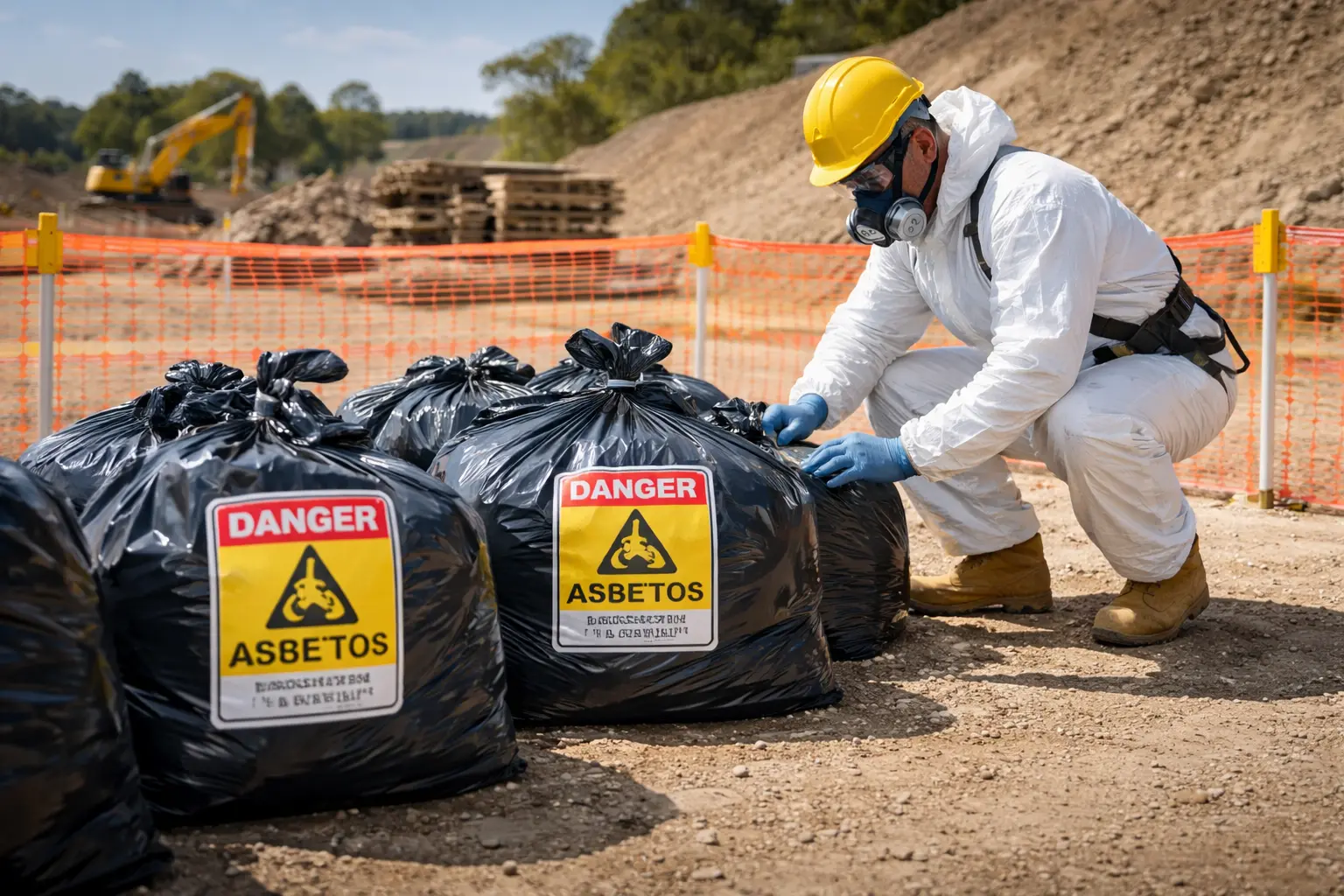
First, workers wrap asbestos sheets in heavy-duty plastic sheeting. Then they seal the material with strong tape and often double-wrap the package. Because this sealed packaging prevents fibre release, it plays a critical role in safe disposal.
Labelling Asbestos Waste
Next, workers label every package clearly. Warning labels inform landfill operators and transport workers that the package contains hazardous asbestos material.
Transport Rules in Queensland
Finally, contractors transport the sealed waste directly to approved facilities. Secure transport prevents materials from shifting or breaking during transit.
Planning a renovation where asbestos might appear?
Book a Professional Assessment
For residential projects, professional residential asbestos removal in Brisbane ensures safe removal and disposal from the start.
What’s Legal and Illegal When Disposing Asbestos in Brisbane
Queensland regulations clearly define what property owners and contractors can legally do when handling asbestos waste.
Legal disposal includes transporting sealed asbestos waste to licensed landfill facilities, labelling packages correctly and following disposal procedures required by local authorities.
However, illegal disposal includes dumping asbestos in bushland, placing asbestos in household bins or breaking asbestos sheets during demolition. Authorities treat these actions as environmental offences and may impose significant fines.
Because illegal dumping can spread hazardous fibres into the environment, authorities enforce these rules strictly.
Common Disposal Mistakes I See in Brisbane Homes
Over time I’ve seen several common mistakes when homeowners attempt to handle asbestos disposal themselves.
First, many people try to break fibro sheets during demolition. Although this seems quicker, breaking asbestos materials releases fibres into the air. As a result, contamination risks increase immediately.
Second, some homeowners attempt to clean suspicious dust using household vacuums or leaf blowers. Unfortunately, these tools often spread fibres instead of removing them.
Third, some people attempt to transport asbestos themselves without proper packaging. Because the material is not sealed correctly, fibres may escape during transport.
In most cases, these situations begin when someone discovers asbestos during renovation work and tries to solve the problem quickly. However, planning removal and disposal properly usually saves time and prevents larger issues.
The Safe Process for Asbestos Removal and Disposal
Professional asbestos removal follows a structured process designed to minimise fibre release.
First, specialists inspect the property and identify asbestos materials. Next, they isolate the work area and prepare containment measures. After that, trained workers remove asbestos sheets carefully without breaking them.
Then workers seal and label the asbestos waste. Finally, licensed transport delivers the waste to an approved disposal facility.
This process ensures that asbestos remains contained from removal through final disposal.
What Happens to Asbestos After It Reaches a Disposal Facility
Many homeowners wonder what happens after asbestos reaches the landfill.
Once the waste arrives at the facility, landfill operators move it to designated hazardous waste zones. Next, they place the material in controlled burial areas and cover it with soil immediately.
Because landfill operators isolate these areas carefully, asbestos remains contained permanently. As a result, the fibres cannot spread into surrounding soil or air.
When You Need Professional Asbestos Removal
Although small asbestos jobs may sometimes seem manageable, professional removal often provides the safest solution.
You should contact professionals if you plan renovations in an older home, if demolition reveals asbestos materials, or if asbestos roofing or wall sheets appear damaged.
Additionally, urgent situations sometimes occur when materials break during construction work. In those cases, emergency asbestos removal in Brisbane can stabilise the site and prevent contamination from spreading.
Suspected asbestos during renovation or demolition?
Request Emergency Asbestos HelpConclusion
Understanding asbestos disposal in Brisbane helps property owners manage asbestos safely and legally. Because asbestos waste is hazardous, strict regulations require proper packaging, transport and disposal at licensed landfill facilities.
Most importantly, safe disposal begins with proper removal procedures. When asbestos appears in a property, professional advice helps prevent contamination and ensures compliance with Queensland regulations.
By following the correct process and working with experienced professionals, homeowners can handle asbestos issues safely while protecting both their property and the surrounding environment.
FAQs
Where can asbestos be disposed of in Brisbane?
Licensed landfill and waste management facilities accept asbestos waste. Contractors must contact these facilities before transporting asbestos materials.
Can asbestos go in normal rubbish bins?
No. Queensland regulations prohibit placing asbestos waste in general waste bins.
What happens to asbestos after disposal?
Landfill operators bury asbestos waste in designated hazardous zones and cover it with soil to prevent fibre release.
Is it illegal to dump asbestos?
Yes. Illegal asbestos dumping can result in significant fines and environmental penalties.