If you’re checking an older property, understanding asbestos in eaves Brisbane is essential. Many homeowners only think about asbestos when renovations begin. However, eaves are one of the most common places where asbestos still exists, especially in homes built before the late 1980s.
In Brisbane, I’ve seen this scenario repeatedly. A renovation starts, someone removes part of the ceiling or roofline, and suddenly a flat cement sheet appears in the eaves. At that moment, everything stops because no one is sure whether the material contains asbestos.
Therefore, knowing how to identify asbestos in eaves early can prevent delays, reduce stress and help you plan safely.
Why Asbestos Is Common in Eaves in Brisbane Homes
Builders widely used asbestos cement sheets in Australian construction for decades. As a result, many Brisbane homes still contain asbestos in areas that people rarely inspect.
Eaves became a common installation point because they:
- protect roof edges
- provide ventilation
- require durable, weather-resistant materials
Consequently, asbestos cement sheets worked perfectly for this purpose at the time.
From experience, eaves are often overlooked until renovation work begins. Meanwhile, homeowners focus on kitchens, bathrooms or roofing, so they miss what sits just under the roofline.
👉 Not sure if your eaves contain asbestos?
Book an Asbestos InspectionA professional asbestos inspection in Brisbane helps identify materials before any work begins.
How to Identify Asbestos in Eaves
You cannot always confirm asbestos visually. However, several indicators can help you identify suspect materials.
First, consider the age of the property. If the house was built before 1990, asbestos may be present.
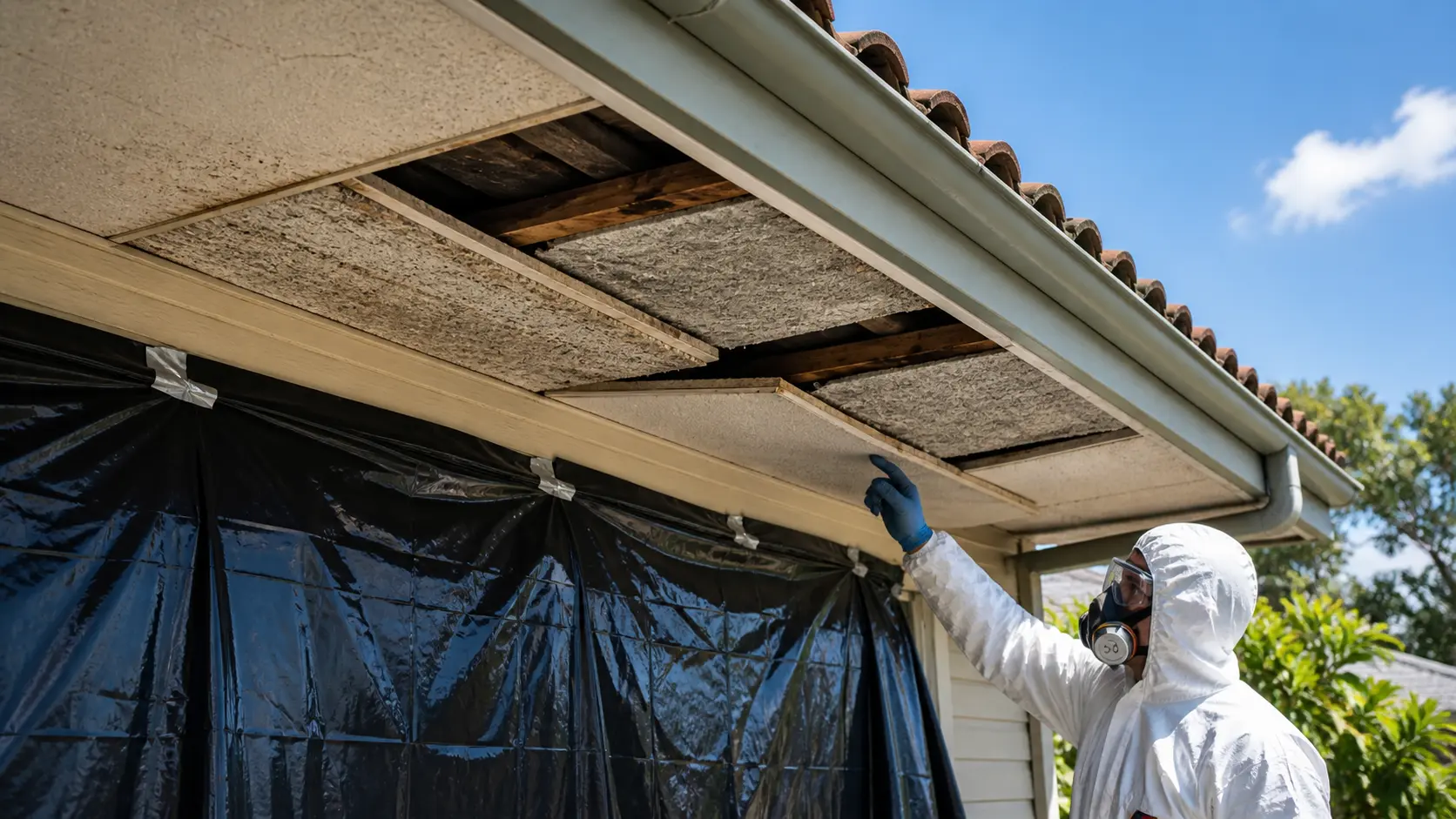
Next, look at the material itself. Asbestos eaves often appear as flat, grey cement sheets.
Additionally, check the edges. Fibrous or slightly rough edges may indicate asbestos cement.
Finally, consider location. Eaves combined with older fibro construction increase the likelihood of asbestos.
Even so, visual checks only provide clues. Testing remains the only way to confirm asbestos.
What Asbestos Eaves Look Like (Real Signs)
In many Brisbane homes, asbestos eaves share common characteristics.
Typical signs include:
- flat cement panels under the roof edge
- small ventilation holes or patterns
- painted or weathered surfaces
- brittle edges in older materials
In my experience, homeowners often assume these panels are harmless because they look solid. However, problems begin when someone drills, cuts or breaks them during renovations.
Are Asbestos Eaves Dangerous?
Asbestos eaves are not always dangerous if they remain intact. However, they become a risk once disturbed.
For example, cutting or sanding eaves can release fibres into the air. These fibres can spread quickly, especially in outdoor areas where wind carries dust.
I’ve seen cases where someone removed a section of eaves without realising the risk. Then dust spread into nearby areas, which created a bigger cleanup problem.
Therefore, the real danger comes from disturbance, not just presence.
Common Mistakes I See With Eaves Asbestos
Over time, I’ve noticed several mistakes that happen repeatedly in Brisbane properties.
One common issue involves cutting eaves during roof repairs. Another frequent mistake occurs when homeowners use power tools without checking the material first.
Additionally, some people try to clean dust with household vacuums or blowers. Unfortunately, this spreads fibres instead of removing them.
Finally, many assume outdoor asbestos is less dangerous. In reality, wind can move fibres further and faster.
These mistakes often turn a small issue into a much larger one.
What to Do If You Suspect Asbestos in Eaves
If you suspect asbestos in your eaves, take a careful and controlled approach.
First, avoid disturbing the material. Do not cut, drill or sand the surface.
Next, limit access to the area if possible. This helps reduce exposure.
Then, arrange a professional inspection or testing process.
If asbestos is confirmed, plan removal properly rather than rushing into action.
👉 Found suspicious material in your eaves?
Get Professional AdviceProfessional asbestos removal in Brisbane ensures safe handling and disposal.
Can You Remove Asbestos Eaves Yourself?
In Queensland, limited asbestos removal is sometimes allowed for small amounts of bonded asbestos. However, eaves removal often involves risks that make DIY approaches unsafe.
For example, working at height increases complexity. In addition, breaking sheets during removal can release fibres.
Because of these risks, most homeowners choose professional removal instead of handling it themselves.
When to Call a Professional
You should contact a professional when:
- renovations involve eaves or roofing
- materials appear damaged or brittle
- you are unsure about asbestos presence
- demolition work is planned
From experience, early action always reduces delays. Projects move faster when asbestos gets identified before demolition begins.
👉 Planning a renovation or roof work?
Book Residential Asbestos RemovalFor homes, professional residential asbestos removal in Brisbane helps keep projects safe and on schedule.
Conclusion
Understanding asbestos in eaves Brisbane helps homeowners avoid unnecessary risks and delays.
Because eaves often contain asbestos in older properties, early identification becomes critical. When handled correctly, asbestos does not need to create major problems.
However, once disturbed, it can quickly turn into a serious issue.
The safest approach always involves identifying materials early, avoiding disturbance and seeking professional advice when needed.
FAQs
How do I know if my eaves contain asbestos?
Older homes built before 1990 often contain asbestos eaves. Visual signs help, but testing confirms it.
Are asbestos eaves safe if left alone?
Yes, intact materials usually remain safe. However, disturbance increases risk.
Can I remove asbestos eaves myself?
Some small removals may be legal, but professional removal is safer and more reliable.
What should I do if I damage asbestos eaves?
Stop work immediately and contact a professional for advice.