If you’re asking “Can I remove asbestos myself in QLD?”, you’re probably mid-reno, planning a demo, or trying to avoid a stop-work surprise. Either way, you want a clear answer quickly.
I’m Pio, based in Brisbane. I see the same pattern all the time: people want to do the right thing; however, they don’t get clear info early enough. As a result, they rush, disturb the material, and then pay more in delays, stress, and clean-up.
So, let’s make this simple, accurate, and practical.
Quick answer (Queensland): Yes, sometimes but the rules are strict
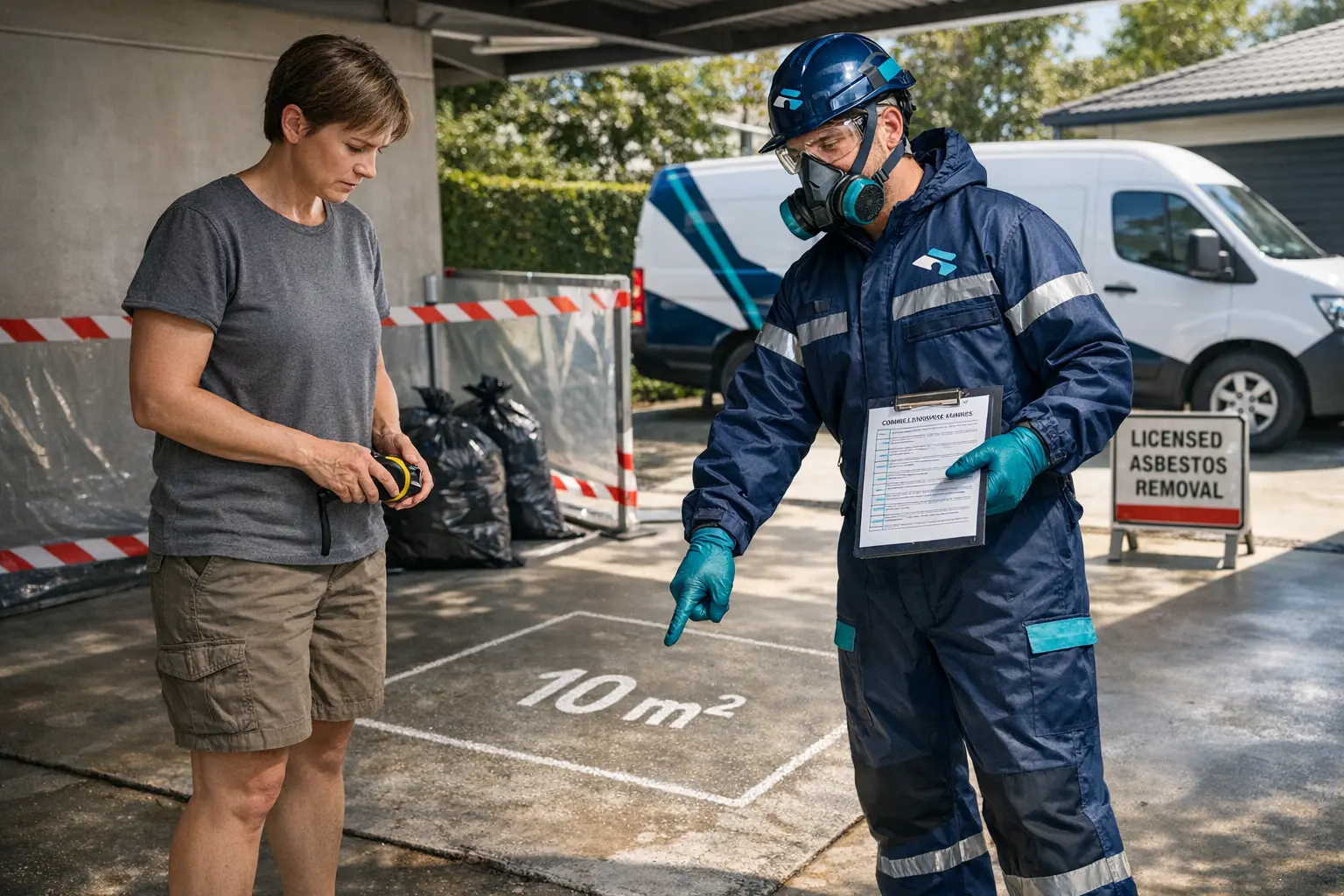
In Queensland, homeowners and owner-builders can remove up to 10m² of non-friable (bonded) asbestos themselves in some situations. However, QLD places stricter requirements on larger bonded jobs, and it does not allow DIY removal of friable asbestos.
Because the line between “allowed” and “bad idea” gets blurry fast, I recommend you confirm what you’re dealing with before you touch it.
Book a quick asbestos check or quote→especially if you’re renovating and need certainty.
DIY asbestos in QLD: the rules in a fast table
Use this table as your decision map. Then measure your scope and choose a safe next step.
| Situation | Can a homeowner DIY in QLD? | What you need to check | My practical take |
|---|---|---|---|
| Non-friable (bonded) asbestos ≤ 10m² | Sometimes, legally | Confirm it’s bonded + keep it intact | Legally possible, however most people underestimate dust control |
| Non-friable (bonded) asbestos > 10m² | Not without training | Homeowner certificate requirements apply | At that size, planning matters more than “saving a few bucks” |
| Friable asbestos (crumbly/deteriorated) | No | Treat as high risk | Don’t gamble — organise professional removal |
| Not sure if it’s friable or bonded | Don’t DIY yet | Confirm the material first | Testing/inspection saves your timeline and your nerves |
If you want the safest route from the start, use asbestos inspection in Brisbane to confirm what you have and what you can legally and safely do next.
Bonded vs friable: why this decides everything
DIY rules hinge on one factor: friable vs non-friable.
- Friable asbestos crumbles easily, so it releases fibres far more readily. Therefore, it requires licensed removal and stricter controls.
- Non-friable (bonded) asbestos usually sits in cement products (often called “fibro”). It can look stable, but cutting, breaking, or sanding can still release fibres.
Here’s what I see in Brisbane: people assume, “If it’s outside, it’s fine.” However, wind spreads dust. Consequently, a “small shed job” can turn into a contamination headache.
If you already know you’re dealing with bonded material and you want a professional scope, start here: non-friable asbestos removal in Brisbane.
The #1 DIY trap: you turn “intact” asbestos into a real risk
Most DIY disasters start with a “quick check”:
- Someone cuts a corner to see what’s underneath.
- Then they sweep or vacuum with household gear.
- Next, fibres spread through the area (and sometimes into the house).
People want a fast fix; therefore, they move fast. Unfortunately, asbestos punishes speed. If you suspect asbestos, don’t drill, sand, cut, or break it. Instead, stop and confirm the safest plan.
Get advice on the safest next step →especially if you’ve already disturbed something.
When DIY is technically allowed (but still a bad idea)
Even when the scope stays under 10m², you still need to answer one hard question:
Can you remove it intact without creating dust — and keep everyone away while you do it?
If you can’t confidently say yes, DIY usually isn’t worth it.
DIY often goes wrong when:
- the sheets already look weathered or damaged,
- the area has tight access (eaves, corners, roof edges),
- you need to carry material through the home,
- you can’t keep kids, neighbours, and pets away,
- you don’t have a proper waste plan.
In addition, many people underestimate how far dust travels. As a result, they “finish the job” and then spend weeks worrying about what they can’t see.
A safer decision flow you can use today
- Stop and assess. Don’t touch the material yet.
- Confirm what it is. Use a professional check (especially before renovations).
- Measure the scope. Work out the approximate m² and the locations.
- Choose the right approach. DIY only makes sense when the material is bonded, intact, and under the limit — and you can keep it intact.
- If you want certainty and clean handover, hire it out. A proper scope usually saves time and stress.
If you’re renovating and want a clear plan (not guesses), start with asbestos removal in Brisbane to understand the professional pathway and what “done properly” looks like.
FAQs: Can I remove asbestos myself in QLD?
Can I remove asbestos myself in Queensland if it’s under 10m²?
Sometimes, yes for non-friable (bonded) asbestos, under the right conditions. However, you still need to avoid breakage and dust, and you need a safe waste plan.
What if I need to remove more than 10m² of bonded asbestos?
At that point, Queensland requires additional training/certification steps for homeowners, and the job becomes harder to control safely. Therefore, most people choose a licensed removalist for scope, compliance, and peace of mind.
Can I remove friable asbestos myself in QLD?
No. Treat friable asbestos as high risk and organise professional removal.
What counts as “friable” asbestos?
Friable asbestos crumbles easily. It can appear degraded, damaged, or powdery when dry. Because it releases fibres more readily, it triggers higher-risk controls.
What if I’m not sure whether it’s asbestos?
Don’t guess. Instead, confirm it before you touch it especially if you’re about to renovate.
Bottom line
Yes, QLD allows homeowners to DIY small amounts of bonded asbestos in some cases. However, legality doesn’t equal safety. In practice, the biggest costs and headaches start when someone disturbs intact material and spreads dust.
If you want a calm, controlled outcome especially during renovations; get clarity first and act with a plan.
Request an asbestos assessment or removal quote here →