asbestos air monitoring brisbane is one of the safest ways to confirm whether asbestos fibres are present in the air during a removal job. It gives property owners, tenants and contractors clearer evidence before work continues.
When asbestos is disturbed, the real risk is not always visible. Fibres can be too small to see, so professional monitoring helps confirm if the work area remains controlled.
In my experience, many Brisbane homeowners only hear about air monitoring after a contractor mentions it. However, it is better to understand it before removal starts. That way, you know what is being tested, why it matters and what documents to expect.
Why Asbestos Air Monitoring Matters During Removal Work
Asbestos air monitoring checks airborne asbestos fibre levels while asbestos work is being planned, completed or cleared. It is not the same as simply looking at a material and guessing the risk. Instead, air samples are collected and analysed to measure whether asbestos fibres may be present.
This matters because asbestos fibres can become airborne when materials are cut, broken, drilled, removed or poorly handled. Even small disturbances can create concern, especially with friable asbestos. Friable material can crumble under hand pressure, so it carries a higher release risk.
In Brisbane, older homes may contain asbestos in eaves, ceilings, walls, bathrooms, vinyl flooring, fences, sheds and roofing materials. Some materials look harmless until they are disturbed. For that reason, monitoring can be important when removal happens near living areas, neighbours or occupied buildings.
When I assess asbestos-related enquiries, one pattern appears often. The customer is not only worried about removal. They also want proof that the area is safe afterward. Air monitoring helps support that confidence, especially when combined with proper containment and clearance procedures.
It is also useful for commercial and multi-unit properties. For example, schools, offices, rental properties and body corporate sites often need stronger documentation. In those cases, the decision is not just about safety. It is also about compliance, duty of care and record keeping.
However, air monitoring does not replace licensed removal. It supports the process. A competent removalist still needs safe work methods, correct PPE, controlled access and legal disposal. Therefore, monitoring should be seen as part of a complete asbestos risk management system.
If you are planning removal work, start with a proper scope. You can learn more about licensed removal options on our asbestos removal Brisbane service page.
asbestos air monitoring brisbane before removal starts
asbestos air monitoring brisbane may be used before removal to establish background fibre levels. This gives a baseline before work begins. As a result, it becomes easier to compare conditions during and after the job.
Pre-removal monitoring can be useful when asbestos is damaged, disturbed or located in a sensitive area. It may also help when a property has previous contamination concerns.
Request Asbestos Air Monitoring AdviceWhen Air Monitoring Is Required, Recommended or Worth Considering
Air monitoring requirements depend on the asbestos type, the work method and the level of risk. Friable asbestos removal usually requires stronger controls because fibres can be released more easily. In many cases, independent air monitoring is expected around friable asbestos work.
Non-friable asbestos is generally lower risk when it remains intact. However, that does not mean monitoring is never useful. If sheets are damaged, access is tight or removal happens near occupied rooms, monitoring may still be worth considering.
In my experience, the biggest mistake is assuming every asbestos job has the same risk. A small intact fence panel is different from damaged ceiling insulation. Likewise, a controlled outdoor job is different from work inside a bathroom or ceiling cavity.
Residential homeowners often ask whether monitoring is “worth it” for a simple job. The answer depends on the situation. If the material is intact and the removal is straightforward, your assessor may recommend a simpler approach. However, if there is uncertainty, air monitoring gives clearer evidence.
Commercial clients usually have less room for guesswork. Property managers, builders and business owners may need records for compliance files. Therefore, asbestos air monitoring can help support workplace safety obligations and reduce disputes after the work is finished.
Air monitoring may also be useful after accidental disturbance. For example, a tradesperson might drill into asbestos sheeting during renovation work. In that case, the priority is to stop work, isolate the area and arrange professional assessment.
When I have seen these situations, the fastest progress happens when the owner avoids cleaning the dust themselves. Sweeping, vacuuming or moving debris can make the problem worse. Instead, containment and professional guidance should come first.
Friable asbestos and high-risk removal work
Friable asbestos has a higher chance of releasing fibres into the air. Therefore, air monitoring is commonly connected with friable removal projects. It helps confirm whether controls are working during the job.
Non-friable asbestos and damaged materials
Non-friable asbestos can still become risky when broken, cut or weathered. Because of that, air monitoring may be recommended after damage or uncontrolled disturbance.
How The Asbestos Air Monitoring Process Works
The asbestos air monitoring process usually starts with a site review. A competent person, occupational hygienist or licensed asbestos assessor reviews the work area, asbestos type and removal method. Then they decide where samples should be collected.
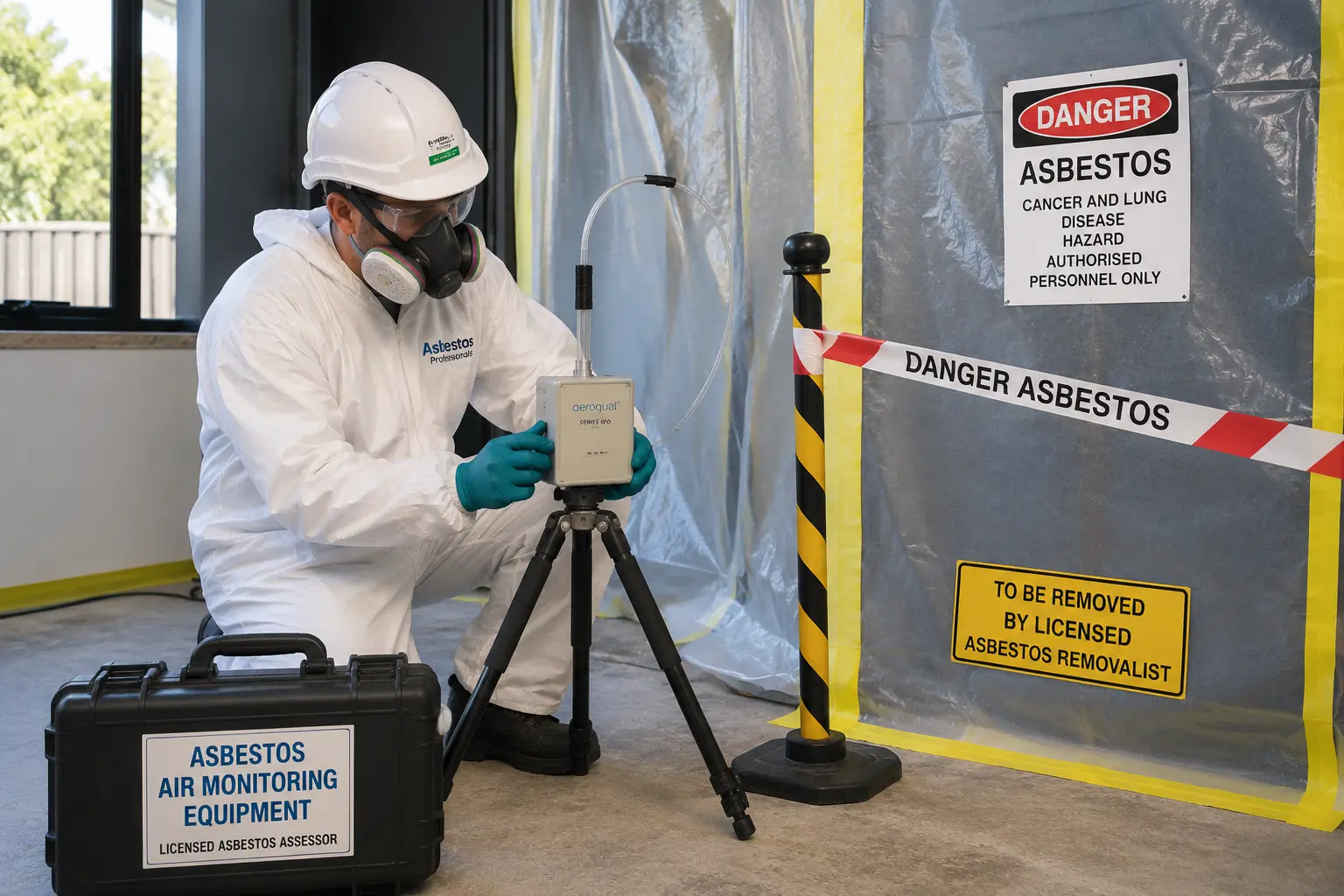
Air sampling pumps are placed in selected locations. These pumps draw a measured volume of air through a filter. After that, the filter is analysed to check for respirable fibres. The monitoring locations depend on the site layout and the risk zones.
During removal, monitoring may be placed near the enclosure, work boundary or nearby occupied areas. This helps detect whether fibres are escaping the controlled zone. If fibre levels rise, work may need to stop while controls are reviewed.
After removal, clearance air monitoring may be completed before the area is handed back. This step is especially important for higher-risk work. It supports the final decision that the area is suitable for reoccupation.
In my experience, clients often confuse air monitoring with a clearance certificate. They are related, but not identical. Air monitoring measures airborne fibres. A clearance inspection checks whether the work area is visually clean and suitable after removal.
Good reporting should be clear and easy to understand. It should include sample locations, timing, results and relevant observations. If the report is too vague, ask for clarification before reopening the area.
For residential jobs, the process should be explained in plain English. Homeowners should know when they can return, what areas are restricted and what documents they will receive. That simple communication prevents confusion.
If the job is inside a home, you may also need an inspection before removal starts. Our asbestos inspection Brisbane page explains how inspections help identify suspect materials first.
During removal: checking containment performance
During active removal, monitoring helps confirm whether containment controls are working. This is important when work occurs near doors, windows, ceiling spaces or shared boundaries.
After removal: confirming the area is ready
After removal, monitoring may support final clearance. However, the site should also be visually inspected. Air results alone do not prove all dust and debris were removed.
Check If Your Job Needs Air MonitoringWhat Air Monitoring Does Not Tell You
Air monitoring is valuable, but it has limits. It does not identify every asbestos-containing material in a property. For that, you need inspection and sample testing of suspect materials.
It also does not remove asbestos. If asbestos is present, licensed removal may still be needed. Therefore, the result should be viewed as one part of the risk picture.
Another important point is timing. Air monitoring only reflects the period sampled. If asbestos is disturbed after testing, the previous result may no longer represent current conditions. For example, a clean result today does not protect against unsafe demolition tomorrow.
When I analyse asbestos jobs, I always look at the sequence. First, identify the material. Next, plan the removal method. Then, use monitoring where the risk justifies it. Finally, complete clearance before the area is used again.
Homeowners sometimes ask whether a normal air test can “prove the house has no asbestos.” It cannot. Many asbestos materials are bonded inside building products. They may not release fibres unless disturbed. So, material identification remains essential.
Air monitoring also depends on correct sampling locations. Poor placement can miss the real risk area. For that reason, it should be planned by someone who understands asbestos removal conditions.
The report should not be used as a shortcut. If dust, debris or damaged asbestos remains visible, the site should not be treated as safe only because one sample looks acceptable. Visual condition still matters.
Air monitoring versus asbestos testing
Asbestos testing usually checks a material sample. Air monitoring checks the air. Both are useful, but they answer different questions.
Air monitoring versus clearance inspection
A clearance inspection checks the removed area after work is complete. Air monitoring may support this process, especially on higher-risk jobs.
Choosing A Reliable Air Monitoring Provider In Brisbane
Choosing the right provider matters because the report may influence safety decisions. Look for clear qualifications, relevant asbestos experience and independent judgement. The person doing the monitoring should understand containment, removal methods and clearance expectations.
Independence is also important. In higher-risk work, the person checking the air should not simply be marking their own work. Independent assessment gives stronger confidence to the property owner.
In Brisbane, asbestos work can involve different property types. Older Queenslanders, post-war homes, brick units and commercial buildings may all contain asbestos materials. Because of that, local experience helps.
When I speak with property owners, I suggest asking direct questions. Who will collect the samples? Where will pumps be placed? How quickly will results be available? What happens if results are elevated? These questions reveal whether the provider has a real process.
A good provider should explain the difference between background, control and clearance monitoring. They should also explain what access restrictions apply while work is happening. If the answer sounds vague, keep asking until the process is clear.
For homeowners, communication is just as important as technical skill. You need to know when rooms can be used again. You also need written proof for your records, especially if you plan to sell, renovate or rent the property later.
If your project involves a home, start with the correct removal pathway. Our residential asbestos removal Brisbane service page explains common home removal scenarios.
Questions to ask before booking
Ask whether the provider has experience with your asbestos type. Also ask whether they provide written reports. Finally, confirm if they can coordinate with the removal contractor.
Warning signs to avoid
Avoid vague quotes with no scope. Also be careful with providers who cannot explain sampling points, turnaround times or what the results mean.
Cost Factors For Asbestos Air Monitoring In Brisbane
The cost of asbestos air monitoring depends on the number of samples, site complexity and timing. A simple residential job may need fewer samples. However, a larger commercial or friable project may require more monitoring points.
Location also affects cost. If the work area has several boundaries, multiple rooms or nearby occupants, more sampling may be needed. As a result, the final fee can vary.
Another factor is urgency. Same-day attendance or fast reporting may cost more. However, fast results can prevent delays when a project must continue safely.
In my experience, the cheapest quote is not always the best choice. A poor report can create more confusion later. A clear report, proper sampling plan and professional explanation usually provide better value.
The asbestos type also matters. Friable asbestos work may involve more controls, more monitoring and more formal clearance steps. Non-friable work may be simpler, although damaged materials can still increase complexity.
Ask for a quote that separates monitoring from removal. This helps you understand what each service includes. It also makes it easier to compare providers fairly.
For many property owners, the main benefit is confidence. You are not just paying for a number on a page. You are paying for evidence that helps guide safe decisions.
asbestos air monitoring brisbane cost considerations
asbestos air monitoring brisbane cost will vary by project scope. Therefore, the best first step is to describe the asbestos type, location and removal plan clearly.
Get A Site-Specific Air Monitoring QuoteFAQs About Asbestos Air Monitoring Brisbane
Is asbestos air monitoring brisbane always required?
No, asbestos air monitoring brisbane is not always required for every small non-friable job. However, it is commonly needed or strongly recommended for higher-risk work. Friable asbestos, damaged materials and occupied sites need closer control.
Who can perform asbestos air monitoring?
Air monitoring should be completed by a competent person, occupational hygienist or licensed asbestos assessor where required. The right person depends on the work type and legal requirements.
Is air monitoring the same as asbestos testing?
No. Asbestos testing checks a material sample. Air monitoring checks airborne fibres. Therefore, both services answer different safety questions.
Can I stay in the house during air monitoring?
Sometimes you may need to stay away from the work area. This depends on the asbestos type, containment setup and removal method. Always follow the assessor’s instructions.
How long does asbestos air monitoring take?
Timing depends on the number of samples and the job type. Some monitoring happens during removal. Other monitoring happens after removal before clearance.
What happens if asbestos fibres are detected?
Work may need to stop while controls are reviewed. The area may also need further cleaning, containment or investigation. After that, more monitoring may be required.
Do I need air monitoring after non-friable asbestos removal?
Not always. However, it may be recommended if the material was damaged, broken or removed near occupied areas. A site assessment gives the best answer.
Does a clean air result mean the property has no asbestos?
No. A clean air result only reflects the sampled air at that time. It does not prove the whole property is asbestos-free.
Should air monitoring be independent from the removalist?
For higher-risk work, independence is strongly preferred. Independent monitoring gives owners and occupants stronger confidence in the result.
What documents should I receive?
You should receive written results or a monitoring report. Where clearance is required, you may also receive clearance documentation after the work area passes inspection.
Final Advice Before Booking Asbestos Air Monitoring
asbestos air monitoring brisbane gives you clearer evidence when asbestos removal carries airborne fibre risk. It is especially valuable for friable asbestos, damaged materials and sensitive sites.
However, monitoring should not be treated as a standalone solution. It works best with proper inspection, licensed removal, safe containment and final clearance.
Lo que he visto es simple. The safest projects are planned before work starts. When the owner, removalist and assessor understand the risk, the job runs cleaner and with fewer surprises.
If you are unsure whether your property needs monitoring, arrange a site-specific review first. That decision can save time, reduce risk and protect everyone involved.