Knowing how to identify asbestos in Brisbane homes is essential if you own, renovate, or purchase an older property in Queensland. Many houses built before the late 1980s contain asbestos materials, especially in fibro walls, roofing, eaves, and outdoor structures.
However, most homeowners don’t realise asbestos is present until renovation work begins. For example, a builder might remove tiles, cut a sheet behind a wall, or demolish an old shed and suddenly discover suspicious cement panels.
Over the years working with asbestos removal in Brisbane, I’ve seen many projects stop unexpectedly because someone discovered possible asbestos halfway through demolition. Therefore, learning how to identify asbestos in Brisbane homes early can prevent delays, reduce health risks, and help you plan renovations properly.
Before we look at the warning signs, it helps to understand why asbestos remains common in many Brisbane properties.
Why Asbestos Is Still Common in Brisbane Homes
Asbestos was widely used in Australian construction for decades because it was strong, fire-resistant, and inexpensive. Builders commonly installed asbestos materials in residential properties from the 1940s until the late 1980s.
As a result, many older Brisbane houses still contain asbestos products today.
According to the Queensland Government and WorkSafe Queensland, asbestos may still exist in homes built before 1990, particularly in cement sheeting and insulation materials.
Official resources explain where asbestos commonly appears:
- https://www.qld.gov.au/housing/public-community-housing/public-housing-tenants/looking-after-your-home/safety/asbestos
- https://www.asbestos.qld.gov.au/know-where-asbestos
In practice, I regularly see asbestos in areas homeowners rarely inspect until renovation starts. Consequently, understanding how to identify asbestos in Brisbane homes becomes an important step before cutting, drilling, or demolishing any building material.
Unsure if your property contains asbestos?
Request a Professional Asbestos InspectionIf you suspect asbestos, professional assessment and asbestos removal services in Brisbane can help identify the material safely and plan the correct removal process.
What Asbestos Looks Like in Brisbane Homes
Understanding how asbestos materials appear visually can help you recognise potential risks. However, visual inspection alone cannot always confirm asbestos. Laboratory testing often provides the only definitive answer.
Nevertheless, certain materials frequently contain asbestos in older Brisbane houses.
Fibro Cement Sheets
Fibro sheets were widely used for walls, ceilings, and external cladding. These panels typically look like grey cement boards with a slightly rough texture.
Many fibro sheets installed before the late 1980s contain asbestos fibres. Therefore, cutting, drilling, or breaking them can release airborne fibres.
Asbestos Roofing
Older corrugated roof sheets sometimes contain asbestos cement. These roofs often appear similar to modern fibre cement roofing but may show weathering or moss buildup.
When roofs age and begin to crack, asbestos fibres can become easier to release.
Vinyl Floor Backing
Another common material appears beneath vinyl flooring. Some older vinyl tiles and sheet flooring contain asbestos in the backing layer.
Because these layers sit underneath floor coverings, homeowners often discover them during kitchen or bathroom renovations.
Common Places to Identify Asbestos in Brisbane Homes
Learning how to identify asbestos in Brisbane homes becomes easier when you know where to look. Several building areas frequently contain asbestos materials.
Eaves and Soffits
Eaves often contain flat cement sheets installed under roof edges. In many Brisbane houses built before 1980, these sheets include asbestos fibres.
Garage and Shed Walls
Backyard sheds frequently contain asbestos fibro sheets. Over the years I’ve seen many homeowners demolish these sheds without realising the panels contain asbestos.
Once the sheets break, fibres can spread through the surrounding area.
Bathroom and Kitchen Walls
Renovations often reveal asbestos behind tiles or wall panels. Builders frequently discover these sheets during demolition work.
Because these areas remain hidden for years, homeowners rarely suspect asbestos until renovations begin.
Roofing and Fencing
Asbestos cement roofing and fencing panels also appear in older Brisbane properties. Weathered sheets may crack or break over time, increasing the chance of fibre release.
Warning Signs When Identifying Asbestos in Brisbane Homes
Although you cannot confirm asbestos visually in every case, several signs may indicate asbestos-containing materials.
Common warning signs include:
- grey cement sheets with a fibrous edge
- older fibro panels installed before 1990
- corrugated cement roofing sheets
- cement backing boards behind tiles
- ageing cement fencing panels
In my experience, homeowners often assume a material is harmless because it looks like ordinary cement board. However, many fibro products used in older Brisbane homes contained asbestos fibres.
Therefore, whenever suspicious cement sheets appear in an older property, it is safest to treat the material as potential asbestos until testing confirms otherwise.
Common Mistakes People Make When Identifying Asbestos
When homeowners try to determine how to identify asbestos in Brisbane homes, they sometimes make mistakes that increase risk.
One of the most common errors is cutting or breaking the material to “see what’s inside.” Unfortunately, that action can release asbestos fibres immediately.
Another mistake involves cleaning dust with household vacuums or leaf blowers. I’ve seen situations where people tried to vacuum suspicious dust after renovation work. Instead of solving the problem, the vacuum redistributed fibres throughout the area.
Similarly, many people demolish old backyard sheds without considering asbestos. Because the structure sits outdoors, they assume the risk is minimal. In reality, fibro shed panels frequently contain asbestos cement.
Therefore, the safest approach always involves avoiding disturbance until proper assessment takes place.
What to Do If You Suspect Asbestos in Your Home
If you suspect asbestos in your property, avoid disturbing the material until professionals assess it.
Instead, follow these steps:
- Stop any renovation or demolition work.
- Avoid cutting, sanding, or breaking the material.
- Restrict access to the area if possible.
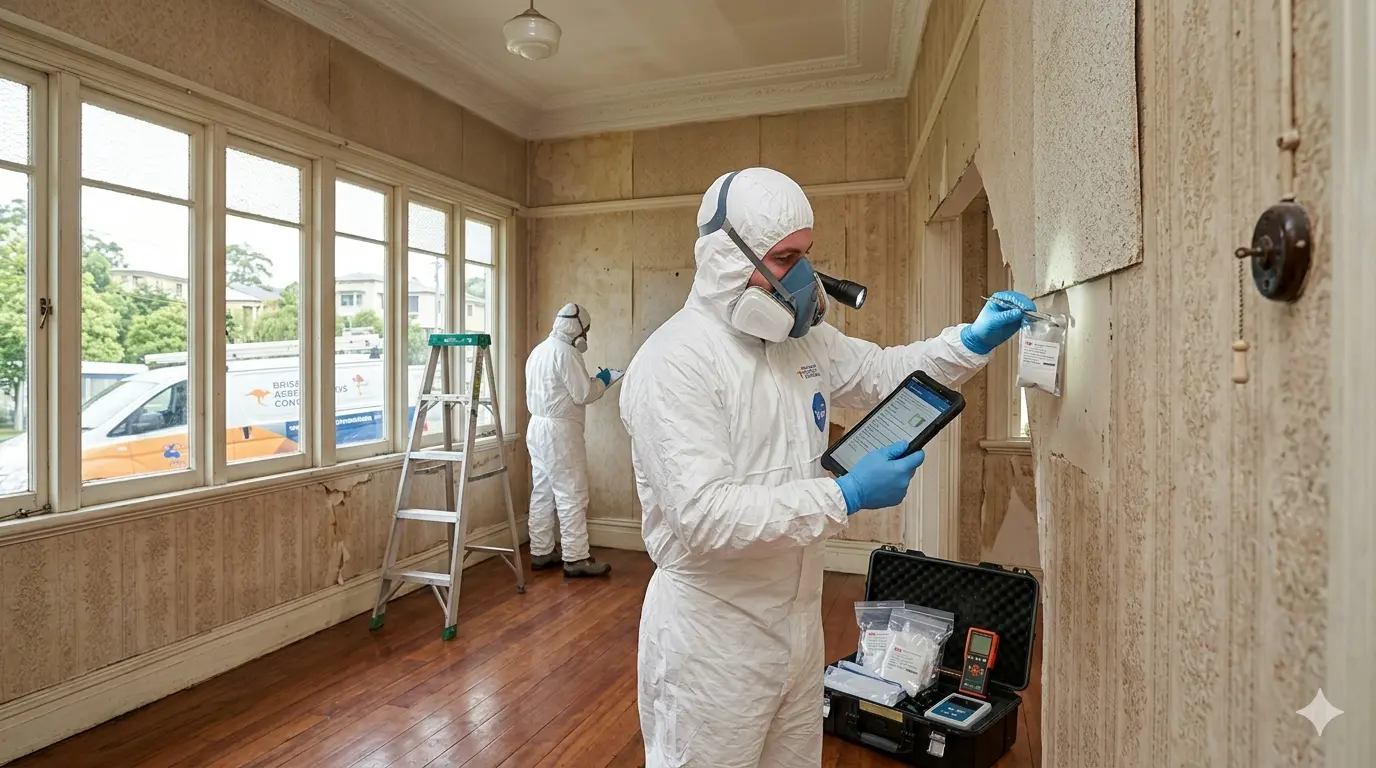
- Contact an asbestos professional for inspection or testing.
Professional testing determines whether asbestos is present and helps plan the safest removal method.
Homeowners also often want to understand potential costs. If you are planning renovations, this guide on how much asbestos removal costs in Brisbane explains the factors that influence pricing.
When to Call an Asbestos Professional
Learning how to identify asbestos in Brisbane homes helps homeowners recognise risks early. However, professional evaluation becomes essential when materials appear suspicious.
You should contact an asbestos specialist when:
- you plan renovations in an older property
- demolition exposes unknown cement sheets
- fibro panels appear in walls or roofing
- dust contamination may already exist
In urgent situations where damage or contamination has occurred, homeowners may require emergency asbestos removal in Brisbane to stabilise the area safely.
Need expert help identifying asbestos?
Get Professional Advice TodayEarly assessment can prevent contamination, protect occupants, and keep renovation projects on schedule.
Conclusion
Understanding how to identify asbestos in Brisbane homes helps property owners recognise potential hazards before starting renovations or demolition work.
Because many Brisbane houses built before the late 1980s contain asbestos materials, homeowners should remain cautious when dealing with older fibro sheets, roofing panels, or cement boards.
Most importantly, if you suspect asbestos in your property, avoid disturbing the material and seek professional advice. Early identification and safe removal procedures help protect both your home and the health of everyone living there.
FAQs
How can you identify asbestos in Brisbane homes?
You can sometimes recognise asbestos by its location and appearance, especially in older fibro cement sheets, roofing, and eaves. However, laboratory testing provides the only reliable confirmation.
What does asbestos look like in a house?
Asbestos materials often appear as grey cement sheets, corrugated roofing panels, or backing boards behind tiles.
Are Brisbane homes likely to contain asbestos?
Yes. Many homes built before the late 1980s in Brisbane may contain asbestos materials in walls, roofing, eaves, flooring, and fencing.
Can homeowners identify asbestos themselves?
Homeowners can recognise warning signs, but professional testing provides the only reliable confirmation of asbestos.