Understanding the difference between an A-Class vs B-Class Asbestos Licence in QLD is essential if you are planning renovations, demolition work, or property upgrades in Queensland.
Many homeowners in Brisbane hear about asbestos licences during building projects, yet they often struggle to understand which licence applies and why it matters. Builders might mention friable asbestos, regulators refer to licensing rules, and suddenly the situation becomes confusing.
In simple terms:
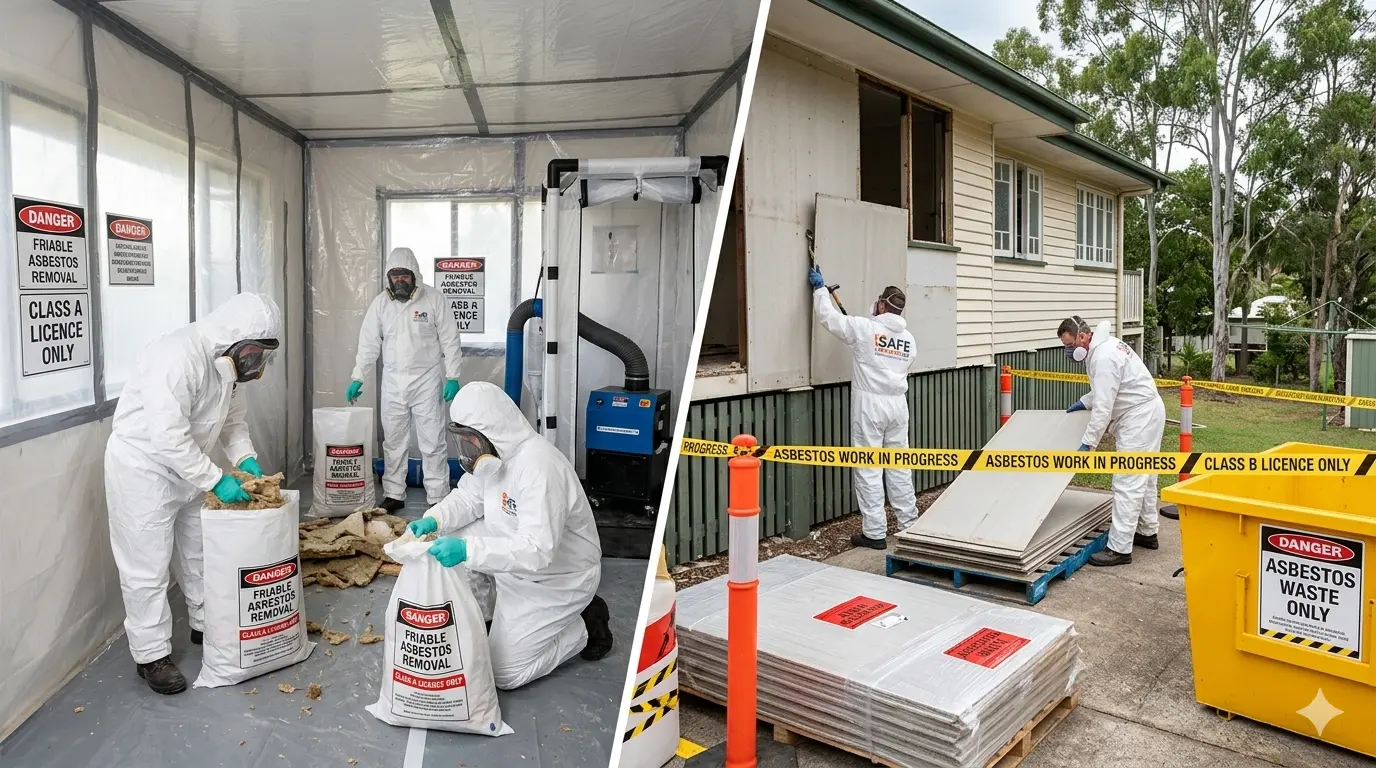
- An A-Class asbestos licence allows professionals to remove all types of asbestos, including friable asbestos.
- A B-Class asbestos licence allows professionals to remove non-friable (bonded) asbestos only, which appears most commonly in residential buildings.
However, the real-world difference becomes clearer when you look at how asbestos actually appears in homes and renovation projects across Brisbane. Over the years working in this industry, I’ve seen many projects delayed simply because people didn’t understand the difference between these two licences.
Let’s break it down in practical terms.
Why the A-Class vs B-Class Asbestos Licence Matters in Queensland
Queensland has strict regulations because asbestos fibres can cause serious health risks when inhaled. Therefore, the government requires trained and licensed professionals to handle removal safely.
According to WorkSafe Queensland, asbestos removal licences exist specifically to control risk and protect workers and occupants. You can read the official regulatory guidance here:
- https://www.worksafe.qld.gov.au/licensing-and-registrations/asbestos-removal-and-licensing
- https://www.worksafe.qld.gov.au/licensing-and-registrations/asbestos-removal-and-licensing/asbestos
Across Brisbane, asbestos commonly appears in properties built before the late 1980s. For example, it often exists in:
- fibro wall sheets
- roof sheeting
- soffits and eaves
- fencing panels
- vinyl flooring backing
- garages and backyard sheds
In practice, many homeowners discover asbestos during renovations rather than before them.
For instance, a builder might remove a wall panel and suddenly notice suspicious cement sheets behind tiles. At that moment, the renovation usually stops while everyone tries to identify the material.
In my experience working with asbestos removal in Brisbane, these surprises happen more often than people expect. Therefore, understanding A-Class vs B-Class asbestos licences helps homeowners make safer decisions from the start.
Need clarity about asbestos in your property?
Book an Asbestos InspectionA professional inspection is often the safest starting point. For example, you can arrange asbestos inspection services in Brisbane to identify the material and plan the correct removal approach.
What Is an A-Class Asbestos Licence in QLD
An A-Class asbestos licence in Queensland allows contractors to remove all types of asbestos materials, including the most hazardous form known as friable asbestos.
This licence represents the highest level of asbestos removal certification in Australia.
Professionals with an A-Class licence can remove:
- friable asbestos
- non-friable asbestos
- contaminated dust and debris
- asbestos from high-risk environments
Because friable asbestos can release fibres easily, regulators require stricter safety controls and specialised training.
Friable Asbestos and the A-Class Asbestos Licence
Friable asbestos refers to material that crumbles easily and releases fibres into the air.
In other words, if the material can be reduced to powder by hand pressure when dry, it qualifies as friable asbestos.
Examples include:
- sprayed asbestos insulation
- loose fill insulation
- deteriorated lagging
- damaged insulation materials
Because these materials release fibres quickly, removal requires containment zones, specialised filtration systems, and strict air monitoring.
When a Class A Asbestos Licence Is Required
In Queensland, an A-Class licence becomes necessary when removal involves:
- friable asbestos materials
- heavily deteriorated asbestos
- contaminated asbestos dust
- industrial asbestos environments
Although most residential asbestos in Brisbane is non-friable, some materials deteriorate over time. When deterioration occurs, the risk increases and the project may require A-Class licensed professionals.
What Is a B-Class Asbestos Licence in QLD
A B-Class asbestos licence in Queensland allows contractors to remove non-friable asbestos only.
This type of asbestos appears most commonly in residential construction materials.
Non-friable asbestos, also known as bonded asbestos, contains fibres locked inside a solid structure. As a result, the material usually remains stable until someone damages or cuts it.
Non-Friable Asbestos and the B-Class Asbestos Licence
Non-friable asbestos frequently appears in materials such as:
- fibro cement wall sheets
- corrugated asbestos roofing
- backing boards behind tiles
- soffits and eaves
- fencing panels
- garage or shed wall sheets
However, the material becomes dangerous when someone cuts, drills, sands or breaks it.
For example, I often see homeowners demolishing old backyard sheds. Because the structure sits outside, people assume the risk is minimal. Unfortunately, many of those sheds contain asbestos fibro sheets.
Once the panels break, fibres can spread through the air quickly. Consequently, a small DIY demolition can suddenly become a contamination issue.
Typical Jobs Covered by a B-Class Asbestos Licence
A B-Class asbestos licence usually covers:
- residential renovations
- asbestos roof removal
- fibro wall removal
- shed or garage demolition
- asbestos fencing removal
Commercial properties may also require bonded asbestos removal. In those situations, contractors performing commercial asbestos removal in Brisbane often operate under B-Class licensing.
A-Class vs B-Class Asbestos Licence in QLD: Key Differences
Understanding the A-Class vs B-Class asbestos licence difference becomes easier with a simple comparison.
| Feature | A-Class Licence | B-Class Licence |
|---|---|---|
| Types of asbestos | Friable and non-friable | Non-friable only |
| Risk level | High risk | Moderate risk |
| Typical projects | Industrial contamination | Residential asbestos removal |
| Dust contamination removal | Allowed | Limited |
| Training level | Advanced | Standard |
Therefore, the easiest way to remember the difference is:
A-Class licence = all asbestos types
B-Class licence = bonded asbestos only
Real Examples of A-Class vs B-Class Asbestos Work in Brisbane
Working with asbestos removal across Brisbane, I repeatedly see situations where understanding A-Class vs B-Class asbestos licences would have saved time and stress.
Renovations That Suddenly Stop
Bathroom and kitchen renovations frequently reveal asbestos behind tiles or wall panels.
A builder begins demolition, discovers suspicious sheets, and then stops the job immediately. At that point, the project requires testing before work continues.
Because many homes built before the 1990s contain asbestos materials, early inspections often prevent renovation delays.
The Old Shed Scenario
Another situation involves backyard sheds.
Many people believe outdoor structures are harmless. However, older fibro sheds often contain bonded asbestos panels.
I have seen homeowners smash those sheets during demolition. Unfortunately, that action can release fibres and create contamination across the yard.
The Vacuum and Leaf Blower Mistake
Another mistake appears surprisingly often.
Homeowners sometimes attempt to clean suspicious dust using a household vacuum or leaf blower. Unfortunately, those tools can spread asbestos fibres across a wider area.
Professional asbestos cleaning requires controlled methods and specialised equipment. Consequently, emergency situations sometimes require emergency asbestos removal in Brisbane to stabilise the area safely.
Do You Need a Licensed Asbestos Removalist in Queensland
Queensland regulations require licensed asbestos removal in several situations.
For example, professionals must handle removal when:
- asbestos exceeds 10 square metres
- friable asbestos appears
- commercial demolition occurs
- contamination risks exist
Even when the law allows small removals, many homeowners still choose licensed removal. In my experience, most clients simply want the work done safely and without future problems.
When to Call an Asbestos Professional
If you suspect asbestos in your property, avoid disturbing the material.
Instead, contact a specialist if:
- you plan renovations in an older house
- demolition reveals unknown building materials
- fibro sheets or roofing appear damaged
- asbestos fencing or sheds require removal
Need help identifying asbestos safely?
Request a Professional AssessmentEarly advice often prevents costly mistakes and keeps renovation projects moving safely.
Conclusion: Understanding A-Class vs B-Class Asbestos Licence in QLD
The difference between an A-Class vs B-Class asbestos licence in Queensland becomes straightforward once you understand the material involved.
In summary:
- A-Class asbestos licence allows removal of friable and non-friable asbestos.
- B-Class asbestos licence allows removal of non-friable asbestos only.
Because asbestos frequently appears in older Brisbane properties, homeowners benefit from understanding these licensing rules before starting renovations.
Most importantly, when asbestos is suspected, professional assessment and proper removal procedures help protect both property occupants and construction workers.
FAQs
What is the difference between A-Class vs B-Class asbestos licence in QLD?
An A-Class asbestos licence allows removal of both friable and non-friable asbestos. A B-Class asbestos licence allows removal of non-friable asbestos materials only.
Can a B-Class asbestos licence remove friable asbestos?
No. Friable asbestos removal requires contractors with an A-Class asbestos licence due to higher health risks.
Who regulates asbestos removal licences in Queensland?
WorkSafe Queensland regulates asbestos removal licensing and safety requirements across the state.
Is asbestos common in Brisbane homes?
Yes. Many homes built before the late 1980s contain asbestos in roofing, walls, fibro sheets, and fencing materials.